
- July 29, 2026
Background
Acute Flaccid Paralysis (AFP) surveillance is a key component of the Global Polio Eradication Initiative. Early identification, timely reporting, and appropriate management of AFP cases are essential for detecting poliovirus transmission and ensuring a rapid public health response. The Rehabilitation Department plays a vital role in recognizing suspected AFP cases, facilitating timely referrals, and supporting the long-term rehabilitation of affected individuals.
The organization of such seminars and orientation sessions in the Rehabilitation Department and ALC reflects the vision of Commandant, Major General Syed Adil Hassnain (HI), Fauji Foundation Hospital, Rawalpindi. These initiatives demonstrate his commitment to promoting continuous professional development, strengthening interdisciplinary collaboration, and enhancing the quality of patient care through capacity-building and evidence-based healthcare practices.
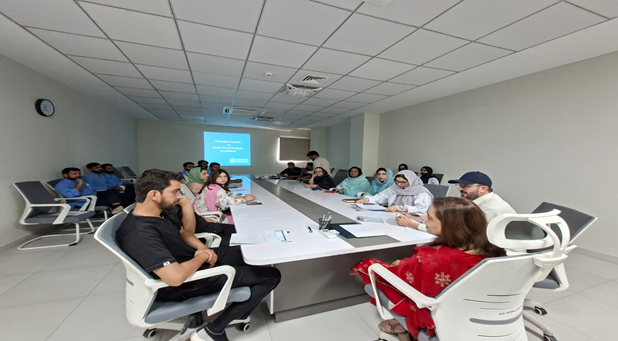
The workshop was conducted by Dr. Sajjad Ali Khan, District Polio Officer (DPO), WHO, who delivered a comprehensive presentation on the objectives, principles, and implementation of the AFP Surveillance Programme. His session emphasized the importance of timely case detection, surveillance procedures, reporting mechanisms, and the collaborative role of healthcare professionals in achieving polio eradication.
The orientation session was under the supervision of Brig. Dr. Syed Naveed Mumtaz (Retd.), Head of the Department of Rehabilitation and ALC. The orientation session was chaired and organized by Dr. Naureen Tassadaq, Head of Unit, Rehabilitation Department. The session was attended by representatives from all sections of the Rehabilitation Department, including physiotherapists, occupational therapists, speech and language therapists, rehabilitation physicians, nurses, medical officers, and other allied health professionals. Mrs.Shahiza, ALC Manager, along with her team, also actively participated in the session.
The program aimed to strengthen participants’ knowledge of Acute Flaccid Paralysis (AFP) surveillance, improve interdisciplinary coordination, and enhance the capacity of healthcare professionals to identify, refer, and manage suspected AFP cases at an early stage.
Objectives
- Enhance participants’ understanding of Acute Flaccid Paralysis (AFP) and its public health significance.
- Review the AFP surveillance system, including case definitions, notification, investigation, and reporting procedures.
- Clarify the roles and responsibilities of healthcare professionals in AFP detection and notification.
- Strengthen collaboration between the Rehabilitation Department and the WHO surveillance team.
Target Participants
- Rehabilitation Physicians
- Physiotherapists
- Occupational Therapists
- Speech and Language Therapists
- Nurses
- Medical Officers
- ALC Officers
- Other Allied Health Professionals
Session Highlights
- Overview of Acute Flaccid Paralysis (AFP)
- AFP case definition and surveillance indicators
- Case detection, investigation, and reporting pathways
- Specimen collection and referral procedures
- Role of rehabilitation services in AFP management and follow-up
- WHO presentation on AFP surveillance strategies and best practices
- Interactive discussion and question-and-answer session
Expected Outcomes
By the end of the session, participants will be able to:
- Identify suspected AFP cases promptly.
- Understand the national AFP surveillance and reporting process.
- Coordinate effectively with surveillance teams for timely case notification and investigation.
- Contribute to strengthening AFP surveillance and supporting national polio eradication efforts through effective rehabilitation services and interdisciplinary collaboration.
.